



Think of your faucet as the heartbeat of your kitchen or bathroom; when it falters, it can disrupt your daily routine. Whether you’re dealing with annoying leaks or low water pressure, fixing common faucet issues in Wickliffe, OH, doesn’t have to be intimidating. You can restore that steady flow with the right tools and a little know-how. Let’s explore the steps you need to take for a smooth-running faucet.
Identifying Common Faucet Problems
Have you ever wondered why your faucet drips or makes strange noises? Identifying the problem is the first step toward a solution.
Common issues include dripping, which often means a worn-out washer or O-ring. If your faucet squeaks or rattles, it could be due to loose parts or mineral buildup. A faucet that won’t turn off completely might’ve a faulty cartridge or valve seat.
If you notice low water pressure, check for clogs in the aerator or supply lines. Strange sounds, like banging or humming, can indicate air in the pipes or a failing valve.
You might also encounter leaks around the base, signaling a need for new seals or tightened connections. By recognizing these issues early, you can prevent bigger problems down the line. Additionally, toilet leaks can result from worn-out parts, just like faucet issues.
Stay proactive, and your faucet will thank you with smooth operation!
Tools and Materials Needed for Repairs
When tackling faucet repairs, having the right tools and materials on hand can make all the difference.
Before diving into your repair project, gather these essential items to guarantee a smooth process:
- Adjustable wrench: This versatile tool helps you grip and turn nuts and bolts securely.
- Screwdriver set: A mix of flathead and Phillips screwdrivers will tackle various screws you may encounter.
- Plumber’s tape: This helps create a watertight seal on threaded connections, preventing leaks.
- Replacement parts: Depending on the issue, you might need new washers, O-rings, or cartridges specific to your faucet model.
Additionally, accurately diagnosing plumbing issues can prevent unnecessary repairs and save time.
With these tools and materials ready, you’ll be well-equipped to efficiently address common faucet issues.
Step-by-Step Instructions for Fixing Leaks
With your tools and materials ready, you can now tackle the common problem of faucet leaks. First, turn off the water supply to your faucet.
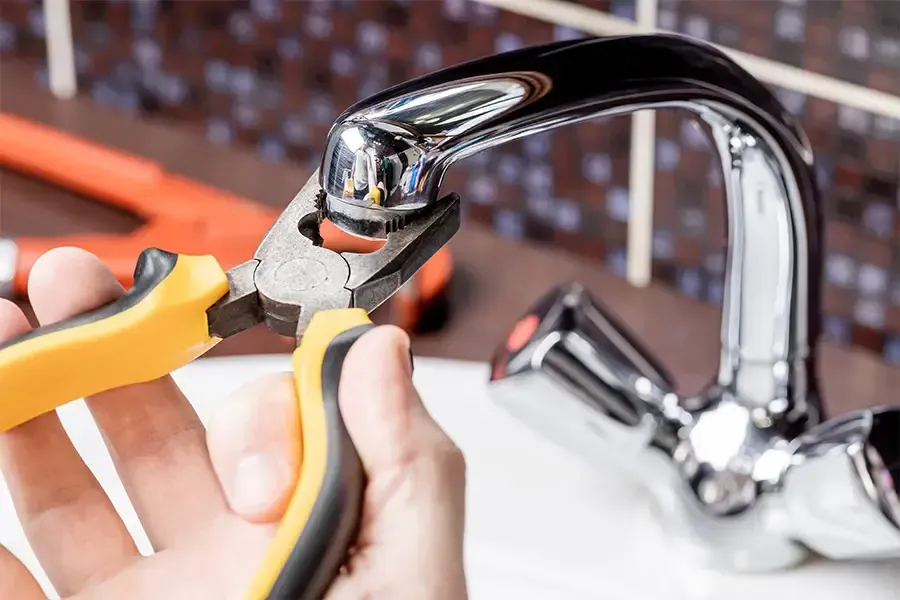
Then, remove the handle by unscrewing any visible screws or gently prying it off with a flathead screwdriver. Once the handle’s off, use a wrench to unscrew the packing nut, exposing the stem or cartridge inside.
Check for worn washers or O-rings. If they’re damaged, replace them with new ones that match your faucet model. Additionally, be aware that burst pipes can also lead to issues like leaks if not addressed promptly.
Reassemble the faucet by reversing your steps: put the stem back in, tighten the packing nut, and reattach the handle. Finally, turn the water supply back on.
Test the faucet to verify the leak is fixed. If it still drips, you might need to evaluate replacing the cartridge, but for now, you’ve taken an important step in maintaining your faucet.
How to Replace a Faucet Cartridge
Replacing a faucet cartridge is a straightforward process that can restore your faucet’s functionality and eliminate leaks. Start by turning off the water supply to avoid any spills.
Next, remove the handle by loosening the screw, often hidden under a decorative cap. Once the handle’s off, take out the retaining nut to access the cartridge. Pull it straight out and replace it with the new cartridge, making sure it fits securely.
Here’s a quick checklist for your replacement:
- Gather the necessary tools: a screwdriver, pliers, and a new cartridge.
- Turn off the water supply: prevent any leaks during the process.
- Carefully remove the old cartridge: avoid damaging other components.
- Test the faucet: after installation, check for leaks and proper function.
Additionally, if you notice any unfamiliar sounds coming from your plumbing, it might indicate other issues that need to be addressed. Following these steps will help you efficiently replace your faucet cartridge, ensuring a leak-free and fully functional faucet.
Preventative Maintenance Tips for Faucets
Regular maintenance can considerably extend the lifespan of your faucets and prevent costly repairs down the line.
Start by regularly checking for leaks; even a small drip can waste water and lead to bigger issues. Clean the aerator every few months to remove mineral buildup that can affect water flow. Simply unscrew it, rinse it in vinegar, and reattach it.
Next, inspect the washers and O-rings for wear and tear. Replacing these components can stop leaks before they start. Make it a habit to tighten any loose screws to guarantee everything stays secure periodically.
Lastly, keep your faucets free from harsh chemicals that can cause corrosion. Instead, use mild soap and water for cleaning.
Conclusion
Fixing your faucet issues in Wickliffe, OH, can seem intimidating, but it’s truly rewarding. By taking the time to address leaks and other problems, you’re not just enhancing your home’s functionality; you’re also saving water and money. Imagine the sense of accomplishment when you stop that annoying drip and enjoy a smoothly running faucet. With a little effort and care, you can guarantee your faucet serves you well for years to come.